
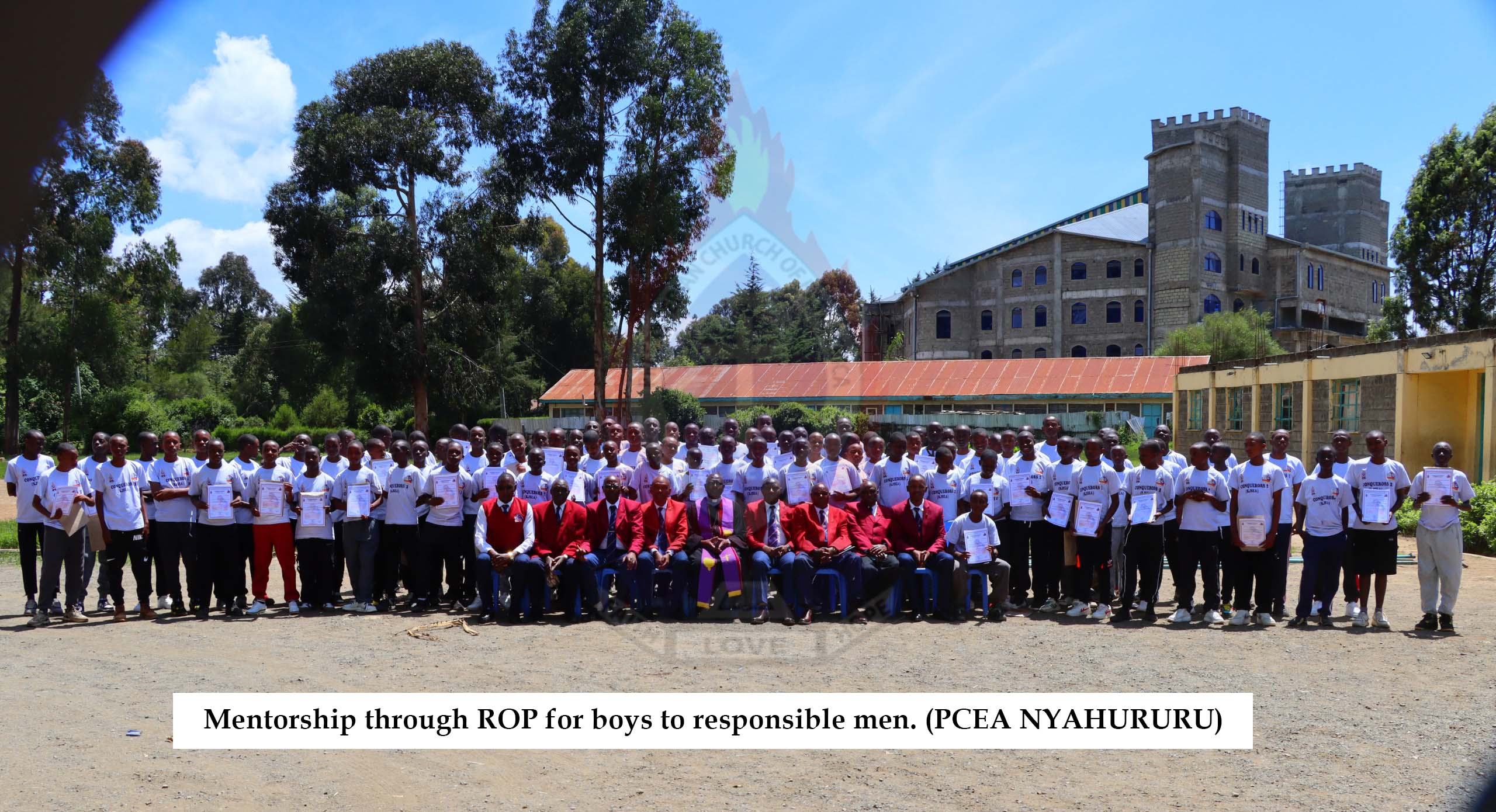
Mentorship Through ROP – Not an Event, but a Process
November and December are recognized across Kenya as the season when different communities conduct the Rite of Passage (ROP). Traditionally, male circumcision has served as the key marker of a boy’s transition into manhood in many Kenyan cultures.
In the late 1990s, the Presbyterian Church of East Africa (PCEA) identified a mentorship gap affecting adolescent boys. Many were grappling with challenges such as drug abuse, low self-esteem, school unrest, bullying, illicit sexual behaviour, and declining respect for authority – issues linked to the absence of structured, value-driven rite of passage programs. In response, the Church developed the Rite of Passage (ROP) Program.
The program was pioneered with a concern for mentorship for the boy child from early Years of PCMF with the following leaders : the Late Very Rev. Dr. John Gatu, Rev. Dr. Charles Kibicho, Rev. Dr. Wilfred Kogo, Late Mr. Joe Muchinji, Rev. Peter Kaniah, and Rev. Henry G. Kaira. It was initially designed for boys but later expanded to include a girls’ mentorship component known as: the Attendance Rite of Passage (AROP). In this structure, boys undergo both circumcision and mentorship, while girls participate in a mentorship program. Today, the Church’s modern approach combines the traditional practice of circumcision with biblical principles and holistic mentorship. The PCEA Men’s Fellowship, in partnership with the Woman’s Guild, continues to champion the program across congregations.
The goal of the ROP program is to bridge developmental gaps, provide a supportive learning environment, teach essential life and adaptive skills, instill Christian values, cultivate a healthy worldview, and guide adolescents through change. It is structured into three distinct phases:
- Separation (pre-initiation)
- Transition (initiation)
- Incorporation (post-initiation)
Importantly, the ROP is a mentorship process, not a one-time event. It requires the active involvement of all stakeholders, including parents or guardians, medical teams, mentors, counselors, pastoral teams, and the young people themselves.
Many PCEA congregations have embraced this responsibility, guiding both boys and girls as they transition from childhood to young adulthood, particularly as they prepare to join senior secondary school. Key topics addressed include:
- Spiritual formation
- Biblical manhood and womanhood
- Human growth and development
- Drug and substance abuse
- Mental health
- Sex and sexuality
- Media and social media influence
- Disability inclusion
Manuals that guide the ROP program include ‘Mentorship Manual Through the Rite of Passage’ and ‘Mentorship Through Rite of Passage Programs: Champions Guide’ by the Presbyterian Church of East Africa.